It works on appetite signals
These medicines act on hormone pathways involved in hunger and fullness, and they slow digestion. For some people that means feeling hungry less often.
Clinician-led semaglutide or tirzepatide care when appropriate, with nutrition coaching and medication delivered to your door. A licensed clinician decides who is eligible.
Compounded medications are not FDA-approved. Medication cost is separate from membership. Read the Important Safety Information.

GLP-1 medicines are prescribed for adults when a licensed clinician decides they are appropriate. Here is the idea in plain language.
These medicines act on hormone pathways involved in hunger and fullness, and they slow digestion. For some people that means feeling hungry less often.
Your clinician starts with a low dose and steps up gradually, only if side effects are manageable. You never change a dose on your own.
Medication is one tool. Food, movement, sleep and regular check-ins carry the rest. Appetite and weight can change after stopping, so that is planned with your clinician.
A licensed clinician may prescribe semaglutide or tirzepatide if they decide you are a candidate. Each can come as a manufacturer brand or as a compounded version. Compounded medications are not FDA-approved.
Once-weekly injection
Once-weekly injection
| Attribute | Manufacturer brand | Compounded |
|---|---|---|
| Who makes it | The drug manufacturer, under its own label | A compounding pharmacy, prepared to a prescription |
| FDA status | Labeled and reviewed by the FDA for its listed uses | Not FDA-approved |
| Safety and potency review | Reviewed in clinical trials and printed on the label | Not reviewed by the FDA for safety or effectiveness before sale. Quality depends on the pharmacy. |
| Dose steps | Printed schedule from the label | Clinician sets the schedule. Confirm the concentration with the pharmacy. |
Example only, not a prescription. Select a step to read about it.
If a clinician prescribes a once-weekly medicine, you choose the day that is easiest to remember. Try it to see how doses and deliveries line up.
Sample planner for people who have been prescribed a weekly medicine. Your clinician sets your dose and your schedule, and a delivery usually arrives 2 to 5 days after it ships.
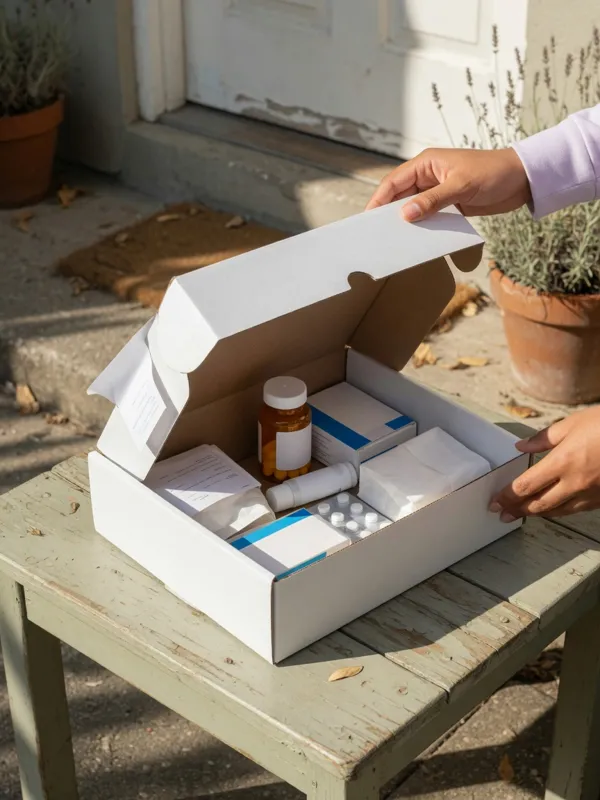
When a clinician prescribes medication, a licensed pharmacy prepares it for you and ships it in plain packaging. Delivery is included with every plan.
A weekly dose takes minutes. The rest of the week is food, movement, sleep and routine, and your coach helps with all of it. Plus and Plan for two include coaching.


Protein at each meal helps you feel full and supports your muscles. Your coach sets a daily range for you.
Vegetables, beans, whole grains and regular water help with digestion while your appetite changes.
Short walks and two or three strength sessions a week. Start where you are, and build from there.
An example sequence. Your clinician sets your own schedule, and steps happen only if you are ready for them.
Clinician reads your intake and orders baseline labs if needed.
If medication is prescribed, it ships and the starting dose begins.
Your coach builds a plate and a walking routine around your week.
Side effects, hydration and appetite reviewed together.
Only if tolerated, and only when the clinician confirms.
Coach adjusts portions and timing where protein runs short.
Walks get longer and strength sessions get a little harder.
Weight, waist and energy reviewed, plus any side effects.
Dose steps are never automatic.
Repeat labs ordered if your clinician indicates.
Keep what works, drop what does not.
Your clinician sets the plan for the next stretch with you.
Nausea, constipation and low appetite are the most common early effects. Many ease with small adjustments, and your care team helps. Tell us about anything that persists or worsens.
Common in the first weeks and after each step up.
Slower digestion is expected with GLP-1 medicines.
Appetite drops, and protein can slip without a plan.
Vomiting or diarrhea can cause fluid loss quickly.
Vomiting that stops you keeping fluids down. Severe stomach pain that spreads to your back, which can signal pancreatitis. Yellowing of the skin or eyes. Symptoms of low blood sugar that do not settle. This list is not medical advice and does not replace urgent care. In an emergency, call emergency services.
GLP-1 medicines are not right for everyone. These are common reasons a clinician may decline or pause treatment.
A licensed clinician decides eligibility, and may decline even when nothing on this list applies to you.
Care, coaching and delivery in one monthly fee. Medication is billed separately, and the sample range is stated below so there are no surprises.
See all plans ↗$199/mo
Brand products are made by the manufacturer and labeled for their listed uses. Compounded medications are prepared by a compounding pharmacy. Compounded medications are not FDA-approved. The FDA does not review them for safety or effectiveness before they are sold.
A licensed clinician decides eligibility after your assessment, medical history and any labs. Some people cannot use a GLP-1 medicine, including anyone with a personal or family history of medullary thyroid carcinoma or MEN 2, and anyone who is pregnant.
No. Many members start with nutrition coaching and labs, and medication is only part of the plan if your clinician decides it is appropriate and you want it.
Every two weeks while a dose is being adjusted, then monthly. Each check-in covers side effects, nutrition, movement and the next dose step. You can message your team any time in between.
You can pause or cancel any time. Stopping a GLP-1 medicine often changes appetite and weight, so that decision is made with your clinician, who helps plan what comes next.
In rodents, semaglutide and tirzepatide cause thyroid C-cell tumors, including medullary thyroid carcinoma (MTC). It is not known whether they cause thyroid C-cell tumors, including MTC, in people. Do not use if you or a family member has had MTC, or if you have Multiple Endocrine Neoplasia syndrome type 2 (MEN 2). Tell your clinician about symptoms of thyroid tumors, such as a lump or swelling in the neck, hoarseness, trouble swallowing or shortness of breath.
Not for use in pregnancy. Tell your clinician right away if you may be pregnant or are planning a pregnancy.
Individual results vary, and the examples on this page are illustrative. Medication is for adults and is used with nutrition and activity. Eligibility is decided by a licensed clinician.
Compounded medications are not FDA-approved and have not been evaluated by the FDA for safety, effectiveness or quality. Ask your clinician for the full prescribing information and medication guide before you start. This page describes a fictional sample practice and is not medical advice.
Start with the assessment. A licensed clinician reviews it, then decides whether a GLP-1 plan is right for you.