Sample sitefictional practicenot medical adviceall samples
Weight care Testosterone & peptides Care team Pricing FAQ

Weight care that starts with your labs.

GLP-1 medication (semaglutide or tirzepatide) when a licensed clinician decides it fits, with a protein target, strength work and follow-up labs. No shortcuts, no hype.

  • Labs firstBaseline panel read before any prescribing decision
  • MonthlyDose reviews with your clinician
  • 3 a weekStrength sessions, logged in your portal

Compounded medications are not FDA-approved. Results vary, and a licensed clinician decides who is a candidate.

A man cracks eggs into a bowl in a green-tiled kitchen, with tomatoes and herbs on the counter.
Protein today
128/ 150 g
Sample day, illustrative
Next dose
Thu

Weight is one number. We read six.

For men over 35, where weight sits and what it does to the rest of your chart matters more than the scale alone.

A man in a dark green jacket jogs along a lakeside trail at sunrise with mist over the water behind him.
  • Waist

    Where weight sits matters. Extra around the middle carries more health risk than the same weight elsewhere, so we track waist-to-height ratio.

  • Blood pressure

    Weight change often moves blood pressure. You send home readings, and your clinician reviews the trend.

  • Blood sugar

    Fasting glucose and HbA1c show how your body handles sugar, and where you sit relative to type 2 diabetes.

  • Cholesterol

    A lipid panel shows heart-risk markers that weight change and medication can both shift.

  • Liver enzymes

    ALT and AST can flag fatty liver changes, which are common with extra weight and worth knowing about.

  • Sleep

    Loud snoring and daytime sleepiness can point to sleep apnea, which affects weight, energy and hormones. We screen for it.

Weight and testosterone are linked both ways.

Extra body fat can lower testosterone, and low testosterone can make weight harder to manage. A clinician checks both before choosing a plan, and never starts testosterone on one reading.

Two molecules, clear labels.

We prescribe semaglutide or tirzepatide when a licensed clinician decides you are a candidate. Each can come as a manufacturer brand or as a compounded version. Compounded medications are not FDA-approved.

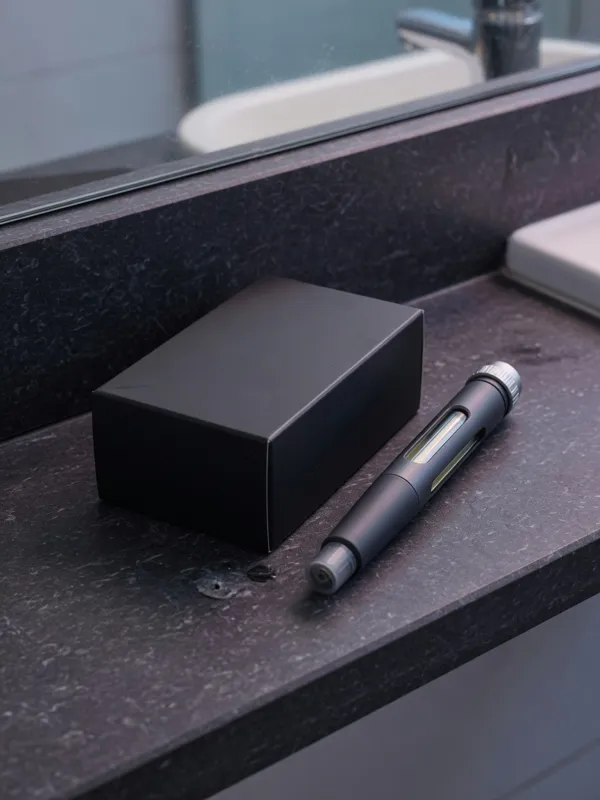
An unbranded black box and a gray injection pen resting on a dark stone bathroom counter.
Illustrative photo: an unbranded box and pen. Medication ships only if a clinician prescribes it.

Semaglutide

GLP-1 receptor agonist, once-weekly injection

Weight-management brand
Wegovy
Same molecule, diabetes brand
Ozempic
Compounded version
Not FDA-approved. Made by a compounding pharmacy for an individual prescription and not reviewed by the FDA for safety or effectiveness before sale.

Tirzepatide

GLP-1 and GIP receptor agonist, once-weekly injection

Weight-management brand
Zepbound
Same molecule, diabetes brand
Mounjaro
Compounded version
Not FDA-approved. Made by a compounding pharmacy for an individual prescription and not reviewed by the FDA for safety or effectiveness before sale.
Brand and compounded, side by side
AttributeManufacturer brandCompounded
Who makes itThe drug manufacturer, under its own labelA compounding pharmacy, prepared to a prescription
FDA statusReviewed by the FDA for its labeled usesNot FDA-approved
Safety and potencyStudied in clinical trials and printed on the labelNot reviewed by the FDA before sale. Quality depends on the pharmacy.
Dose stepsPrinted titration schedule on the labelClinician sets the schedule. Concentration is confirmed with the pharmacy.

Semaglutide dose steps

Example only

How a labeled schedule steps up, shown for illustration. Your clinician sets your own schedule, and compounded concentrations can differ. Compounded medications are not FDA-approved.

  1. 0.25Wk 1–4
  2. 0.5Wk 5–8
  3. 1.0Wk 9–12
  4. 1.7Wk 13–16
  5. 2.4Wk 17+

Milligrams, once weekly. Not a prescription. Your clinician decides each increase based on how you tolerate the last one.

Tirzepatide dose steps

Example only

How a labeled schedule steps up, shown for illustration. Your clinician sets your own schedule, and compounded concentrations can differ. Compounded medications are not FDA-approved.

  1. 2.5Wk 1–4
  2. 5Wk 5–8
  3. 7.5Wk 9–12
  4. 10Wk 13–16
  5. 12.5Wk 17–20
  6. 15Wk 21+

Milligrams, once weekly. Not a prescription. Many men settle at a lower step that works for them, and that is a normal outcome.


Four rules, one ordinary week.

Dose, protein, strength and check-ins run together, and each one is tracked in your portal. Here is what a typical week looks like.

  1. Monday

    Strength A, lower bodyProtein logged
  2. Tuesday

    30 minute walkProtein logged
  3. Wednesday

    Strength B, upper bodyProtein logged
  4. Thursday

    Dose day30 minute walkProtein logged
  5. Friday

    Rest dayProtein logged
  6. Saturday

    Strength C, full bodyProtein logged
  7. Sunday

    Weigh-in and logPlan the week

Dose day is set by your clinician. The rest is a template your plan is adjusted from.

Dose

Your clinician starts low and steps the dose up gradually, only if side effects are manageable.

Set by a licensed clinician

Protein

A daily target, commonly in the 1.2 to 1.6 g per kg range, spread across three or four meals and logged in your portal.

Reviewed at every check-in

Strength

Three sessions a week of 30 to 40 minutes, with loads that rise slowly. Each is logged against your week 1 baseline.

Tracked in your portal

Check-ins

Every month during the first six months. Each one reviews side effects, protein, strength, waist and the dose step.

Led by your clinical team

Overhead view of a grain bowl with baked salmon, avocado, greens, citrus and radish.

Appetite drops. Protein should not.

GLP-1 medication reduces hunger, and when you eat less, some of the weight lost can be lean tissue. Protein and resistance training are how you protect it.

  • Protein first at each meal, then the rest of the plate
  • Easy options for low-appetite days: yogurt, eggs, shakes
  • Strength sessions shortened, not skipped, on tired days

The first six months, in order.

An example sequence. Your clinician sets your own schedule, and each step waits on how you are doing.

  1. Week 1

    Intake and baseline

    Clinician visit, history, baseline labs and body measurements. Your protein target is set.

  2. Week 2

    First dose

    The lowest step. Injection technique is reviewed on video before the first one.

  3. Week 3

    Strength begins

    Three sessions a week. Loads are set from a baseline test and logged in your portal.

  4. Week 4

    First check-in

    Side effects, hydration and appetite are reviewed, and protein is checked against the target.

When the stomach pushes back.

Nausea, constipation and low appetite are the most common early effects, and most ease with the adjustments below. Tell your clinic about anything that persists or gets worse.

Nausea

Common in the first weeks and after each step up.

  • Smaller meals, eaten more slowly
  • Yogurt or a shake when whole meals feel heavy
  • Stay upright after eating

Constipation

Slower digestion is expected on GLP-1 medication.

  • Fiber from vegetables, beans and whole grains
  • Steady fluids through the day
  • Daily walking

Low appetite and fatigue

Appetite drops, and protein can slip without a plan.

  • Protein target kept as the daily floor
  • Meal size and timing adjusted
  • Shorter sessions, not skipped ones

Dehydration

Vomiting or diarrhea can drain fluids quickly.

  • Sip through the day, not all at once
  • Tell the clinic if you cannot keep fluids down
  • Hydration reviewed at every check-in

Call your clinic the same day for any of these

Vomiting that keeps you from holding down fluids. Severe stomach pain that spreads to the back, which can signal pancreatitis. Yellowing of the skin or eyes. Symptoms of low blood sugar that do not settle. This list is not medical advice and does not replace urgent care. In an emergency, call emergency services.

Two ways to pay for the care.

Membership covers clinical care and follow-up. Medication is billed separately by the pharmacy, and the sample price ranges are stated so nothing surprises you.

Weight care

Metabolic

$299/mo

Medical weight care, built on your labs.

  • Prescribing evaluation, if a licensed clinician decides it is appropriate
  • Monthly dose reviews and schedule management
  • Protein and strength targets in your portal
  • Lab panels billed at partner-lab rates, about $79 to $189
Start with Metabolic ↗
Quarterly labs included

Complete

$449/mo

Weight care plus hormone and recovery evaluation.

  • Everything in Metabolic
  • Quarterly lab panels included
  • Testosterone evaluation and monitoring when a clinician decides it is appropriate
  • Quarterly visit with an endocrinologist
Start with Complete ↗

What the medication costs

Sample ranges, billed by the pharmacy. Membership does not promise a prescription.

Compounded semaglutide
$199 to $349 a month
Depends on dose. Compounded medications are not FDA-approved.
Compounded tirzepatide
$249 to $449 a month
Depends on dose. Compounded medications are not FDA-approved.
Brand-name medication
Pharmacy price or insurance
Coverage varies by plan and by drug.
Shipping
Included
Licensed pharmacy, with dosing instructions.

Five questions, answered straight.

More in the pricing and FAQ section on the home page. A clinician answers anything else before you commit.

A licensed clinician decides after reviewing your history, measurements and labs. In general these medicines are considered for adults with obesity, or with excess weight and a related condition, and they are not for everyone. Many men start with lifestyle changes and labs alone.

Weight loss on any plan can include some lean tissue. Protein, strength sessions and a slow dose ramp are how we limit that, and we track waist and strength alongside the scale. No plan can promise a specific outcome.

You can stop any time. Your clinician helps plan the transition, since appetite and weight can change after stopping. Maintenance coaching stays available.

Compounded medications are made by a pharmacy to an individual prescription. They are not FDA-approved, and the FDA has not evaluated their safety, effectiveness or quality. Your clinician explains the differences and recommends what fits.

Possibly. Weight and testosterone are linked, so a clinician checks both. Treatment for either is decided separately and always with labs first. See the testosterone page for the path.

Important Safety Information

Boxed warning: risk of thyroid C-cell tumors

GLP-1 medicines such as semaglutide and tirzepatide caused thyroid C-cell tumors in rodents. It is not known whether they cause these tumors, including medullary thyroid carcinoma (MTC), in people. Do not use if you or a family member has had MTC, or if you have Multiple Endocrine Neoplasia syndrome type 2 (MEN 2). Tell your clinician right away about a neck lump, hoarseness, trouble swallowing or shortness of breath.

Common side effects

  • Nausea, vomiting and diarrhea
  • Constipation and stomach pain
  • Reduced appetite and tiredness

Serious risks

  • Pancreatitis (severe, lasting stomach pain)
  • Gallbladder problems
  • Low blood sugar, especially with some diabetes medicines
  • Kidney problems, often after dehydration

Pregnancy

GLP-1 medicines are not for use in pregnancy. Tell your clinician if you or a partner is pregnant or planning a pregnancy.

Results vary

Medication is for adults, is used with nutrition and activity, and is prescribed only when a licensed clinician decides it is appropriate. Results vary from person to person.

Compounded medications are not FDA-approved and have not been evaluated by the FDA for safety, effectiveness or quality. For severe symptoms, seek emergency care. This page describes a fictional sample practice and is not medical advice.

A man relaxes on a sofa at dusk, checking a health app on his phone.

See if weight care fits.

Eight minutes, then a licensed clinician reviews your answers and decides what, if anything, is appropriate.